

Vogt-CTE supplies defense technology that works under real-world conditions: in resilient infrastructures, in decentralized deployment scenarios, with a focus on sustainability and energy efficiency.
Our solutions are designed to make tactical operations more efficient, secure, and effective—even under extreme conditions. In doing so, we create solutions that support today’s threat scenarios and deliver real added value both in active field operations and at the interface with civilian applications.

PowerUP – Hydrogen fuel cell generators and powersupplys for tactical use

EuroHeater – Multi-fuel diesel air heaters for tactical and military use

FlexiBatt – Rechargeable batterypacks and systems for tactical use
FirstLook – Location cameras and search cameras for tactical use
MarenFasty – Water reconnaissance drones for tactical use

Rigloo – Protective shelter tents for tactical and military rescue operations

BlowHard –
Mobile ventilation systems for tactical and military use

Make an online-appointment with Vogt-CTE today. Microsoft Teams

Receive a personalized and customized Vogt-CTE offer

Become part of our European network of sales and system partners
Modern military operations are characterized by high mobility, reduced logistical support, and the deployment of small, high-performance teams. Cold, wet, and windy conditions are not only environmental factors, but also operational adversaries that directly influence performance, decision-making quality, and endurance.
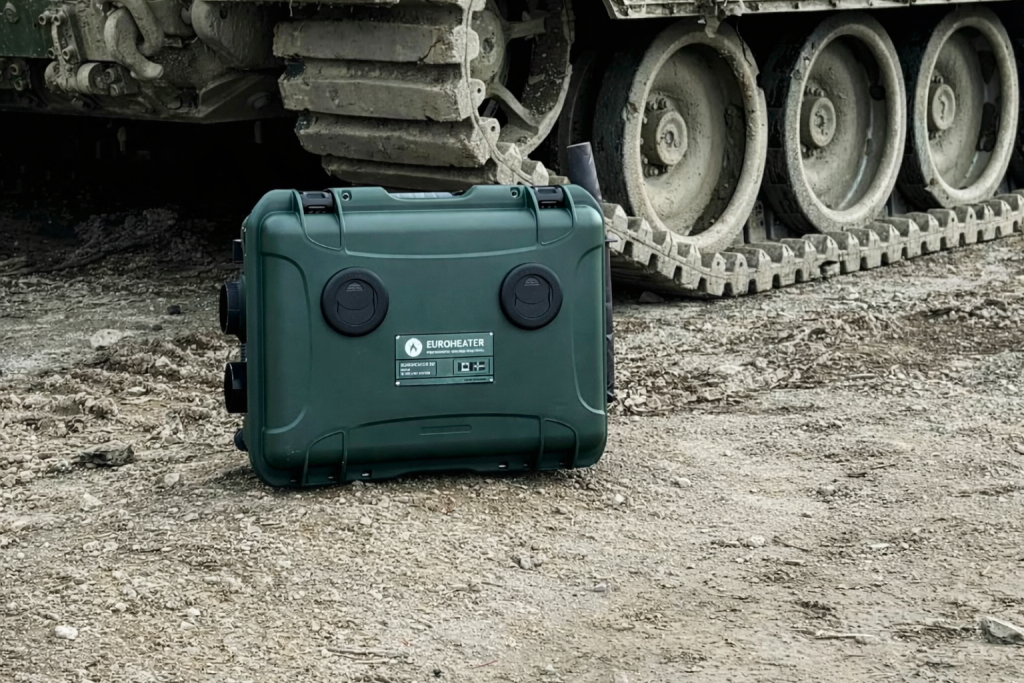
EuroHeater systems were developed precisely for this operational reality. They provide heat with a low noise and heat signature, enable long off-grid operating times, are easy to use, and are robustly designed for real-world field use. The following twelve scenarios illustrate how EuroHeater is used in different military-tactical situations and the specific advantages this offers.
EuroHeater is not a comfort feature in military tactical operations, but an operational enabler. The systems increase endurance, reduce risks, and support small, powerful units in operating longer, quieter, and more independently—exactly as modern operational realities demand.
Long-term observation posts in exposed terrain
A reconnaissance team maintains a concealed observation position in hilly or wooded terrain for several days. Wind, humidity, and low temperatures have a constant effect on the position. Movement must be minimized, as any activity increases the risk of discovery. The soldiers spend long periods motionless in their position, placing great demands on their concentration and physical performance.
Advantages and reasons
Outpost operation without secure logistics
An advanced outpost secures an area far away from regular supply routes. Supply movements are risky and should be kept to a minimum. The unit must operate self-sufficiently, often for several days or weeks. Cold weather has a continuous effect on personnel and equipment.
Advantages and reasons
Delayed evacuation after combat contact
After a brief, intense combat contact, immediate evacuation is not possible. The wounded must remain in position until the situation is secure. Hypothermia poses a significant additional risk, especially in cases of shock or blood loss.
Advantages and reasons
Night transfer with temporary assembly points
A unit transfers at night through difficult terrain. Stopovers serve for orientation, issuing orders, and short regeneration phases. Infrastructure is deliberately kept to a minimum in order to maintain mobility.
Advantages and reasons
Small-scale field camps for modern forces
Instead of large bases, the unit operates a small field camp that is difficult to detect. It serves as a resting, planning, and supply point, but must be able to be abandoned quickly at any time.
Advantages and reasons
Winter operations in urban areas
In urban environments, damaged or unheated buildings are used as temporary positions. Windows, doors, and heating systems are often destroyed. At the same time, camouflage is crucial.
Advantages and reasons
Covert special forces operations
Special forces operate in isolation, often in small teams. Any additional equipment must justify its usefulness. Noise, waste heat, or complex technology are not acceptable.
Advantages and reasons
High alpine and arctic areas of operation
Operations in extremely cold regions place the highest demands on people and equipment. Batteries lose power, mechanics fail, and hypothermia quickly becomes a threat.
Advantages and reasons
Standby and waiting areas
Units are on standby for long periods of time. They must be able to react immediately, but must not cool down during waiting times.
Advantages and reasons
Mobile command posts and control rooms
A small command post is set up in the field. Decision-making, communication, and planning must also function in cold weather.
Advantages and reasons
Securing critical transition points
Bridges, crossings, or bottlenecks are secured for long periods of time. Personnel are often deployed statically and are heavily exposed to the weather.
Advantages and reasons
Modular deployment concepts for small, effective teams
Modern units operate in a modular fashion. Equipment is combined and adapted depending on the mission. Systems must be universally applicable.
Advantages and reasons

WE SUPPLY DEFENSE TECHNOLOGY
At Vogt-CTE, we offer our European partners in the security and defense sector access to unique technological innovations. Our solutions are designed to make tactical operations more efficient, safer, and more effective—even under extreme conditions. The systems we represent are highly specialized, field-tested to military standards, and provide a decisive tactical advantage where it counts. We don’t just supply equipment, we deliver operational progress. Together with our partners, we ensure that these innovations end up exactly where they are needed: in the hands of those who are on the front line defending our security and who must be able to rely unconditionally on their technology.